
Convolutional Spatio-Temporal Attention for Alzheimer’s Disease Classification Using Brain MRI
July 16, 2025
(Research paper submitted to the International Conference on Big Data, IoT, and Machine Learning)
Abstract: Alzheimer’s disease (AD) is a progressive neurodegenerative disorder, and the earliest possible diagnosis is essential for effective treatment. An MRI scan of the brain provides critical information regarding structural alterations in the brain, indicating the onset and progression of AD. This deep learning model classifies brain MRI images into four
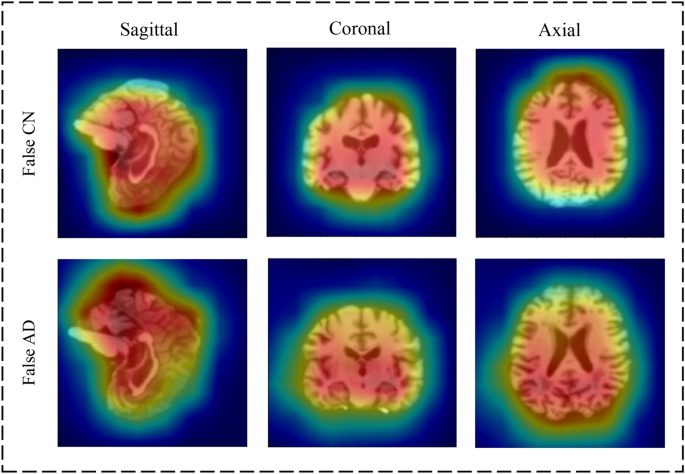
stages of Alzheimer’s disease: Non-Demented, Very-Mild Demented, Mild Demented, and Moderate Demented. The model combines Convolutional Neural Networks (CNN) and a spatio-temporal attention mechanism to improve feature extraction by attending to the most significant regions of interest in the brain. To enhance the performance of the model, several preprocessing steps are applied, such as resizing and normalization of input images, and data augmentation through random changes of brightness, zoom in or out, and the horizontal flip of image pairs. The cropping tool is used to zero in on the regions of interest in the MRI images and eliminate non-relevant portions for a more accurate analysis. To mitigate class imbalance, we apply the Synthetic Minority Over-Sampling Technique (SMOTE) to create synthetic samples for underrepresented classes. The model is trained and evaluated on 6400 labeled MRI images, with a significant level of accuracy achieved. Grad-CAM visualizations were used as an interpretability tool, showing which parts of the brain were most responsible for the classification. It was concluded that an effective combination of CNNs with attention mechanisms and oversampling will improve Alzheimer’s classification and reveal important brain regions vital for diagnosis.
Posted in Deep Learning, Machine Learning